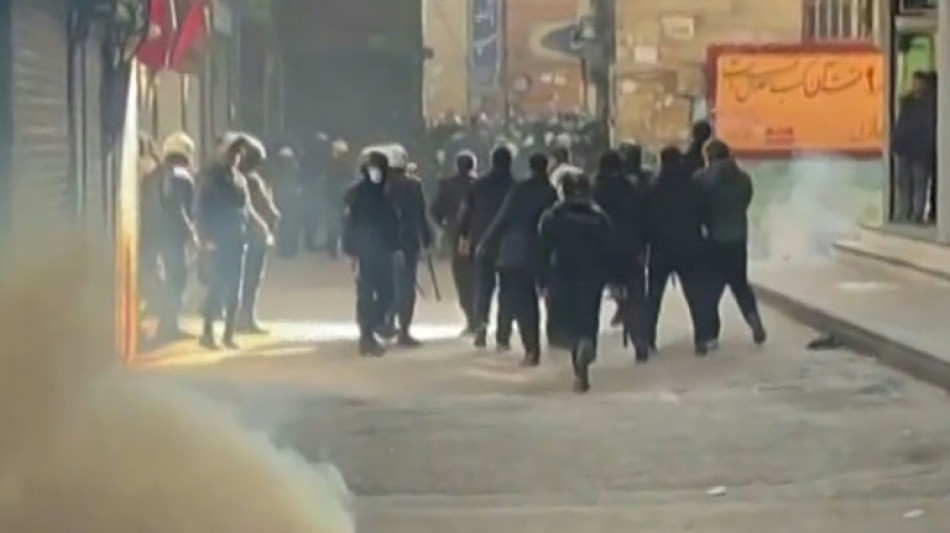
New protests, strikes hit Iran as security forces open fire / Photo: - - UGC/AFP
Protesters denounced the Iranian authorities and staged strike actions Thursday in a new wave of demonstrations that have spread across the Islamic republic, as rights groups accused security forces of shooting on people in several locations.
Twelve days of protests have shaken the clerical authorities under Ayatollah Ali Khamenei already battling an economic crisis after years of sanctions and recovering from the June war against Israel.
The movement, which originated with a shutdown on the Tehran bazaar on December 28 after the rial plunged to record lows, has spread nationwide and is now being marked by larger-scale demonstrations.
Authorities have blamed unrest on "rioters" and the judiciary chief has vowed there would be "no leniency" in bringing them to justice.
On Wednesday, an Iranian police officer was stabbed to death west of Tehran "during efforts to control unrest", the Iranian Fars news agency said.
Reza Pahlavi, the son of the shah ousted by the 1979 Islamic revolution and a key exiled opposition figure, said the turnout on Wednesday had been "unprecedented" in this wave of demonstrations and called for major new protests later in the day.
Iraq-based Iranian Kurdish opposition parties, including the Komala party which is outlawed by Tehran, called for a general strike on Thursday in Kurdish-populated areas in western Iran which have seen intense protest activity.
- Statues attacked -
With the protests now spreading across Iran, the US-based Human Rights Activists News Agency said protests had taken place in 348 locations in all of Iran's 31 provinces.
The Hengaw rights group, which focuses on Kurds and other ethnic minorities in western Iran, said the call for a strike had been widely followed in some 30 towns and cities, posting footage of shuttered shops in the western provinces of Ilam, Kermanshah and Lorestan.
It accused authorities of firing on demonstrators in Kermanshah and the nearby town of Kamyaran to the north, injuring several protesters, as well as cutting the Internet in the region.
HRANA also posted footage it said showed security forces firing on protesters with handguns in Kermanshah.
Internet monitor Netblocks said there was a "loss of connectivity" in Kermanshah "amid rising casualties with indications of disruptions in multiple regions".
The Norway-based Iran Human Rights group (IHR) said a woman protester was shot directly in the eye during a protest late Wednesday in the western city of Abadan.
"The footage provides further evidence of the excessive and unlawful use of force against civilians nationwide," it said.
Protesters in Kuhchenar in the southern Fars province cheered overnight as they pulled down a statue of the former foreign operations commander of the Revolutionary Guards, Qassem Soleimani, who was killed in a US strike in January 2020 and is hailed as a national hero by the Islamic republic, in a video verified by AFP.
- 'Unlawful force' -
The protests are being characterised by larger-scale demonstrations, with images posted on social media showing a big crowd again demonstrating in Abadan on Thursday.
Demonstrators are repeating slogans against the clerical leadership, including "this is the final battle, Pahlavi will return" and "Seyyed Ali will be toppled", in reference to Khamenei.
IHR on Tuesday gave a death toll of at least 27 protesters killed, including five teenagers under the age of 18, in the crackdown on the protests, warning the death toll would climb as more killings were verified.
The Fars news agency said five "rioters" were killed on Wednesday.
Local media and official statements have reported at least 21 people including security forces killed since the unrest began, according to an AFP tally.
The movement has also spread to universities and final exams at a major university in Tehran, the Amir Kabir university, have been postponed for a week, according to ISNA news agency.
In Tehran, security personnel with motorbikes and anti-riot vehicles were seen in some squares as shops and businesses remained open and traffic appeared to flow normally as of yet, according to AFP correspondents in the capital.
The protests are the biggest in Iran for three years after the last major protest wave in 2022-2023 which was sparked by the custody death of Mahsa Amini, who had been arrested for allegedly violating the strict dress code for women.
Rights groups have also accused authorities of resorting to tactics including raiding hospitals to detain wounded protesters.
"More than 10 days of protests have been met with unlawful force," said Amnesty International.
"Iran's security forces have injured and killed both protesters and bystanders."
L.Bernardi--IM