Japan hikes interest rates to 30-year-high / Photo: Kazuhiro NOGI - AFP
The Bank of Japan hiked interest rates to a 30-year high of 0.75 percent on Friday, the first increase since January, as it said the economy had shown signs of improvement.
The unanimous vote to lift the main borrowing rate from 0.5 percent came hours after official data showed the country's core inflation rate held steady in November but still well above policymakers' target.
The yen weakened slightly against the dollar after the widely expected announcement, which puts rates at their highest since 1995.
"Japan's economy has recovered moderately," bank officials wrote in a report explaining the decision. "While uncertainties remain regarding the US economy and the impact of trade policy in each jurisdiction, these uncertainties have declined."
Yields on Japanese government bonds have risen in recent weeks on worries about Prime Minister Sanae Takaichi's budget discipline, while the yen has weakened.
The core consumer price index -- which excludes volatile fresh food -- came in at three percent in November, the same rate as the previous month and in line with expectations. However, it is well above the BoJ's two percent goal, as it has been for some time.
Takaichi, who formally took power in October, has made fighting inflation a major priority.
Her government this week succeeded in getting parliament approval for an extra budget worth 18.3 trillion yen ($118 billion) to finance a massive stimulus package.
She has long advocated for more government spending and loose monetary policy to spur growth.
Since taking office, however, she has said monetary policy decisions should be left to the BoJ.
The bank began hiking rates from below zero in March last year as figures signalled an end to the country's "lost decades" of stagnation, with inflation surging.
However, with worries about the global outlook and US tariffs growing, it paused at the start of 2025, with the last increase in January taking rates to their highest level in 17 years.
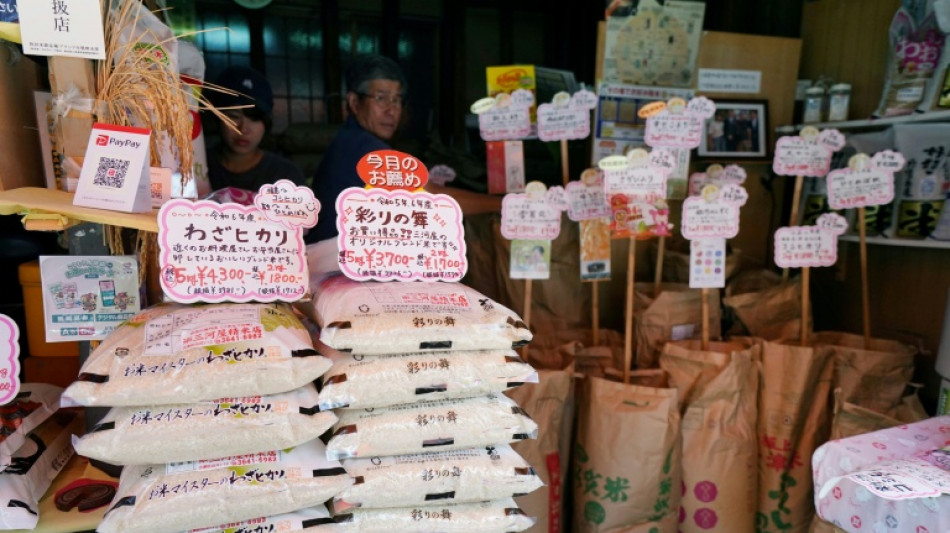
The inflation figures for November showed rice prices jumped 37 percent year-on-year, the internal affairs ministry said.
The cost of rice has skyrocketed because of supply problems linked to a very hot summer in 2023 and panic-buying after a "megaquake" warning last year, amongst other factors.
Japan's economy contracted 0.6 percent in the third quarter, but BoJ governor Kazuo Ueda said last week that the impact of US tariffs was less than feared.
"So far, US corporates have swallowed the burden of tariffs without fully passing (them) through to consumer prices," he told the Financial Times.
M.Fierro--IM