Epstein affair triggers crisis of trust in Norway / Photo: Odd ANDERSEN - AFP/File
From the crown princess to a former prime minister, the Epstein affair has implicated some of Norway's most prominent personalities, triggering a crisis of confidence in a society that prizes trust.
"Something is rotten in the Kingdom of Norway," Norwegian author Aslak Nore wrote in an op-ed last week, paraphrasing Shakespeare's Hamlet.
Many Norwegians share this sentiment in light of revelations unearthed by the recent publication of a new cache of documents related to the investigation of convicted sex offender Jeffrey Epstein.
The nearly three million documents released have illuminated ties between members of Norway's elite and Epstein -- who died in 2019 while awaiting trial for sex trafficking -- showing much closer relationships than previously known.
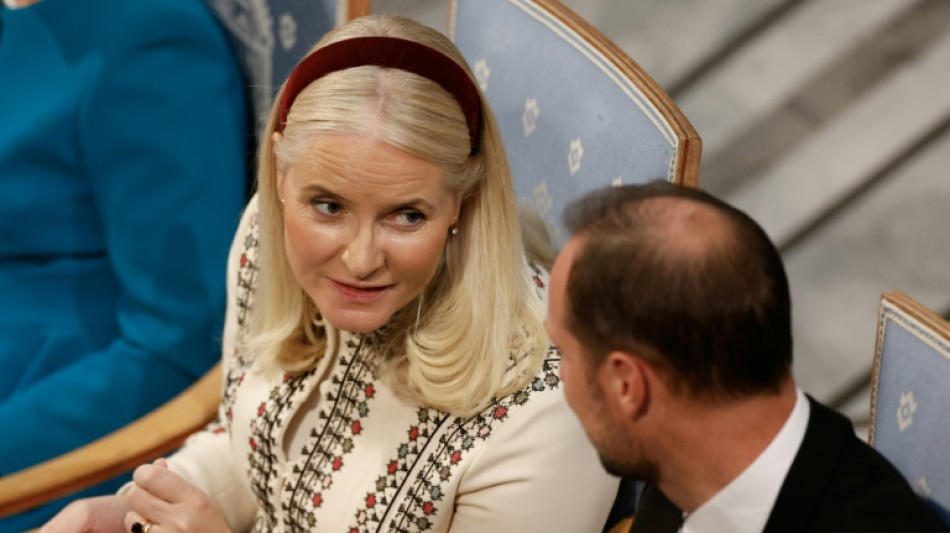
Among them are hundreds of emails dated between 2011 and 2014 -- often with a strikingly intimate tone -- between Norway's Crown Princess Mette-Marit and the financier, who had already been convicted in 2008 for soliciting a minor.
Norwegian police have also opened investigations into "aggravated corruption" against former prime minister Thorbjorn Jagland and high-profile diplomat Mona Juul, along with her husband Terje Rod-Larsen for complicity.
At the centre of the investigation into Jagland are his ties to Epstein when he was chair of the Nobel Committee -- which awards the prestigious Peace Prize -- and secretary general of the Council of Europe.
The probe into Juul is focusing on her ties to Epstein while she was working at the Ministry of Foreign Affairs in Oslo before becoming ambassador to the United Kingdom.
In Switzerland, the World Economic Forum said last week it would conduct an independent review of its CEO, former Norwegian foreign minister Borge Brende, who met Epstein several times in 2018 and 2019.
"Can the major Norwegian institutions that aren't mentioned in the Epstein files please raise their hands?" commentator Eirik Bergersen wrote sarcastically last week.
Several of the figures had previously downplayed the closeness of their relations to Epstein, but have now struck a more apologetic tone instead, most notably Mette-Marit, who issued an apology late last week.
"I deeply regret my friendship with Jeffrey Epstein," she said.
Exchanges unearthed by Norwegian media suggest that some of those implicated benefited from their relationships with Epstein.
- Bad apples? -
The compounding scandals have rattled public trust -- a cornerstone of the social contract of Scandinavian societies.
Norway is considered one of the least corrupt countries on the planet, ranking fifth worldwide in the latest Corruption Perceptions Index from anti-corruption watchdog Transparency International.
"Trust here isn't extremely important for any one thing in particular, but it plays a role in many things," such as voter turnout, welfare systems or acceptance of foreigners, Staffan Kumlin, a professor at the University of Oslo, told AFP.
"Perhaps this high level of trust leads to less oversight, less scepticism, and also lower demands for accountability from elites?" the Swedish expert in political behaviour and democracy posited, while noting that the issue had not been extensively studied.
Norway is considered a broadly egalitarian society where favouritism is despised.
According to an opinion poll for broadcaster TV2, 76.8 percent of people surveyed believed the latest revelations in the Epstein affair have somewhat or significantly weakened trust in the political system.
On Monday, Prime Minister Jonas Gahr Store backed establishing an independent parliamentary commission to examine the nature of the ties between these figures and Epstein.
"Today, people are indignant and angry because there has been a breach of trust. But is it because of a few bad apples or a system that leaves room for corruption?" wondered Halvard Leira, a political scientist at the Norwegian Institute of International Affairs (NUPI).
"It's to be expected that trust takes a hit at first, but everything will depend on how things are handled from here," he said.
"If we can show that there were failings but that we're going to fix them, then trust could even be strengthened."
A.Goretti--IM