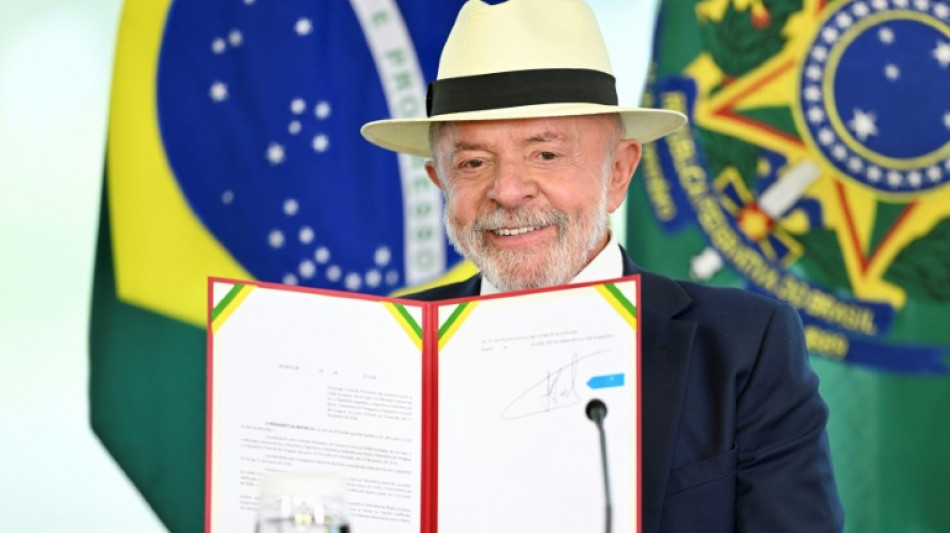
Blockbuster EU-Mercosur trade deal enters into force / Photo: Evaristo SA - AFP
The European Union's mammoth trade deal with South American bloc Mercosur provisionally enters into force Friday, despite a pending court ruling on its legality.
The agreement to create one of the world's biggest free-trade zones was sealed in January after more than 25 years of intermittent negotiations.
The deal, which eliminates tariffs on more than 90 percent of trade between the two sides, has proven divisive in Europe, with France leading opposition over concerns some of its farmers will be left worse off.
But -- backed by a majority of EU countries -- Brussels ploughed ahead as it pushes to diversify trade in the face of challenges from the United States and China.
"A lot of work went into getting this landmark deal over the line; now it’s time to invest the same effort into making sure our citizens and businesses reap its benefits immediately," said European Commission chief Ursula von der Leyen.
"From day one, tariffs are reduced and new market opportunities are opened."
To mark the day, EU chiefs von der Leyen and Antonio Costa will hold online talks with leaders from the Mercosur nations, which include Argentina and Brazil.
Together, the EU and Mercosur account for 30 percent of global GDP and more than 700 million consumers.
The agreement favours European exports of cars, wine and cheese, while making it easier for South American beef, poultry, sugar, rice, honey and soybeans to enter Europe.
The application of the deal comes after the European Parliament referred it to the EU's top court in January, instead of giving it the green light.
France unsuccessfully attempted to block the deal over worries for its farmers, who fear being undercut by cheaper goods from agricultural powerhouse Brazil and its neighbours.
The staunch French opposition to the pact caused a public rift with Germany, pitting the EU's two biggest countries against one another.
At the same time as it has looked to wrap up the Mercosur deal, the EU has also ploughed on with other agreements to get closer to other important markets such as India, Australia and Indonesia.
T.Zangari--IM