Tech sovereignty and AI networks set to dominate mobile meet / Photo: Manaure Quintero - AFP
Tens of thousands flocked to the Mobile World Congress (MWC) in Barcelona Monday, with this year's edition of the telecoms trade fair marked by efforts to integrate AI into networks.
Celebrating its 20th year in the Catalan capital, the annual event is expected to draw around 109,000 professionals and visitors as well as major telecoms operators and equipment manufacturers from around the world.
Usually the day for major announcements, Monday will see appearances from the heads of Indian telecoms giant Bharti, America's AT&T and France's Orange.
And attendees are expected to pack an address by SpaceX chief Gwynne Shotwell, as press reports swirl of an imminent stock market listing for the Elon Musk-owned satellite internet firm.
The broader satellite communications sector will once again be "one of the defining themes of MWC this year", analysts from British research firm CCS wrote.
So-called "direct-to-device" connectivity -- in which phones or other connected gadgets communicate directly via satellites overhead -- "is the hottest topic right now, not just in the satellite industry, but in the mobile operator community", they added.
The telecoms industry can look back on a year of strong growth for global smartphone sales in 2025, adding 1.9 percent to reach 1.26 billion devices.
But firms will also have to ride the waves of multiple upcoming transformations in the sector.
- Memory shortage -
"Sovereign AI will be a big discussion item" at this year's MWC, according to analysts from the GSMA telecoms industry association that hosts the fair, as countries look to insulate their tech infrastructure from geopolitical tensions.
Beyond political considerations, "the mobile industry is facing one of the most unprecedented challenges in its history," said Francisco Jeronimo, an analyst for market intelligence firm IDC.
Manufacturers are confronted with a surge in the price of working memory (RAM) for devices, pumped up by massive demand from tech giants building up their AI computing capacity.
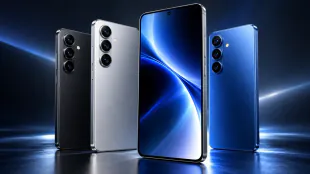
Korean heavyweight Samsung showed off its latest phone models on Wednesday, with the expected prices of the three new gadgets already higher due to the cost of memory.
Over the short term, the price surge will likely trigger a "market contraction" in phones this year, IDC predicted.
But manufacturers will still be keen to show off the innovations crammed into their latest models.
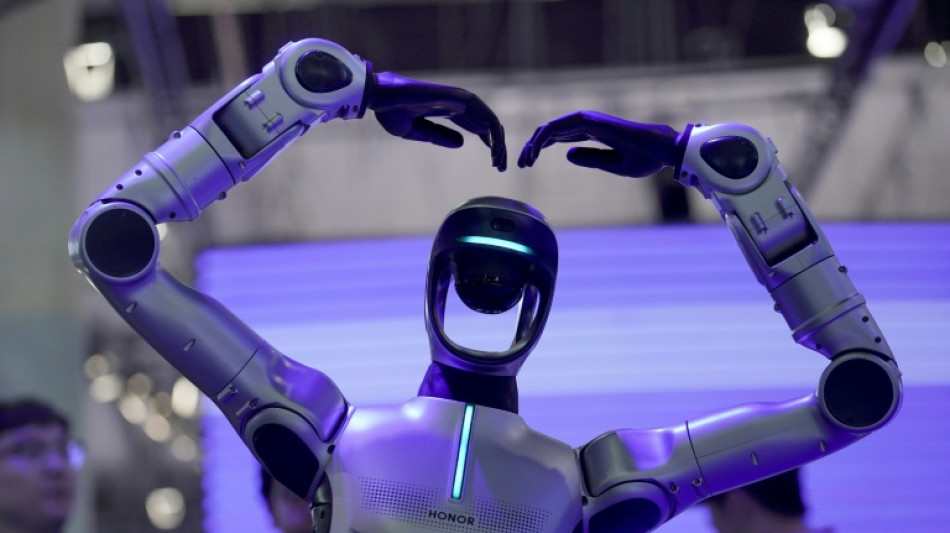
Chinese producer Honor is displaying what it calls a "robot phone" designed to function as a portable AI companion.
The device has a camera on a small robot arm that acts as its head, which Honor said in a Sunday demonstration would be able to nod along with a conversation or look around in response to the user's questions.
The phone is set for launch in the second half of this year.
Chinese competitors Xiaomi and Huawei, sales champions in the connected devices sector, this weekend announced new ranges of watches, headphones and tablets.
Displayed on flashy corporate stands, such new gadgets will line the avenues of the multiple cavernous halls at MWC for visitors to peruse until Thursday.
I.Barone--IM