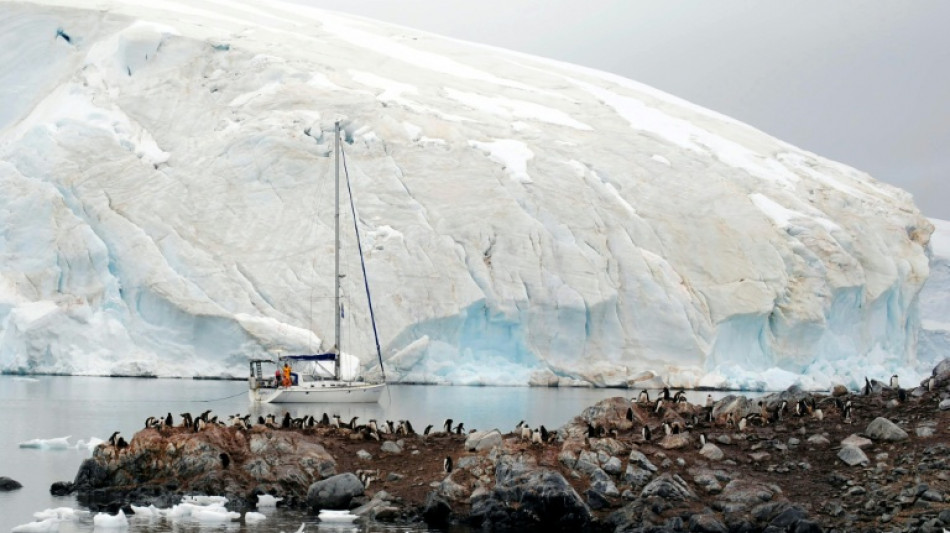
Bird flu ravaging Antarctic wildlife, scientist warns / Photo: Handout - Chilean Antarctic Institute/AFP
Scientists are sounding the alarm over the spread of bird flu across Antarctica, with a leading Chilean researcher telling AFP Tuesday of an observed strain "capable of killing 100 percent" of infected fauna.
Researchers have been warning in recent years of bird flu's spread on the icy continent, which hosts temporary teams of scientists but no permanent residents.
But a particularly dangerous strain of the disease was detected in April 2024 by Chilean researcher Victor Neira and his team in five skuas, a type of polar seabird.
Since then, the virus has spread to other species, with cases detected along 900 kilometers (560 miles) of coastline studied by scientists.
In a recent expedition to Antarctica, new cases were discovered in Antarctic cormorants, kelp gulls, Adelie and gentoo penguins, and Antarctic fur seals, Neira told AFP.
"The virus has completely spread throughout the Antarctic region where we have the capacity to go and study," said Neira, a scientist at the University of Chile and the Chilean Antarctic Institute (INACH).
"This disease is capable of killing 100 percent of the birds in short periods of time," he said.
"For example, in one or two days it can kill 90 percent or 100 percent of the animals in a given area."
Antarctic species are often small in total population, underscoring the risk of outbreaks.
Animals such as Antarctic cormorants and skuas number around 20,000 in total.
A global wave of bird flu has affected birds and mammals around the world since 2021, spread via bird migration.
In 2023, it killed thousands of Humboldt penguins in Chile.
N.Tornincasa--IM